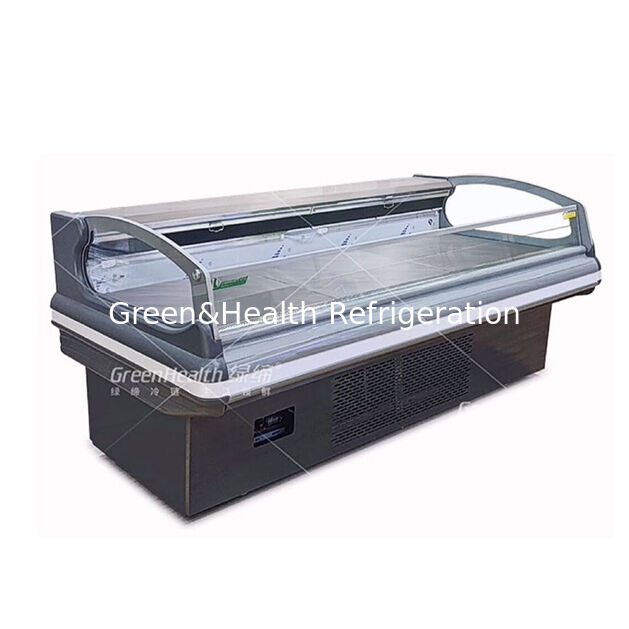
1. O design da unidade de refrigeração externa separa o calor e o ruído da área de exibição, melhorando o conforto na loja, ao mesmo tempo que aumenta a eficiência de resfriamento e permite um controle de temperatura mais estável para a preservação da carne fresca.
2. Os sistemas de fluxo de ar de estilo europeu enfatizam a circulação de ar horizontal uniforme, reduzindo a desidratação e a descoloração da carne, mantendo uma temperatura consistente do produto em toda a superfície de exibição.
3. O controle preciso da temperatura, normalmente dentro de uma faixa estreita adequada para carne fresca, ajuda a retardar o crescimento bacteriano e prolongar a vida útil sem congelamento ou endurecimento da superfície.
4. Interiores de aço inoxidável de alta qualidade e materiais de qualidade alimentar garantem higiene, resistência à corrosão e facilidade de limpeza, atendendo aos rigorosos padrões europeus de segurança alimentar e saneamento.
5. Vidro de grande área e baixa reflexão oferece visibilidade clara do produto, minimizando o ganho de calor da iluminação e das condições ambientais, melhorando a eficácia da comercialização e reduzindo o consumo de energia.
6. Compressores e componentes eficientes em termos de energia, muitas vezes em conformidade com os regulamentos europeus de energia, oferecem desempenho confiável com custos operacionais mais baixos e impacto ambiental reduzido.
7. O design estrutural modular e simplificado permite a instalação flexível em supermercados ou açougues, suportando arranjos de linha contínua e uso eficiente do espaço de varejo.
8. Sistemas avançados de degelo e gerenciamento de condensado reduzem o acúmulo de gelo e umidade, mantendo a operação estável e minimizando os requisitos de manutenção de rotina.
9. A operação silenciosa é alcançada por meio da seleção otimizada do ventilador e do isolamento de vibração, criando um ambiente de compras mais agradável sem comprometer o desempenho da refrigeração.
10. A ênfase na apresentação do produto, incluindo iluminação uniforme e profundidade de exibição rasa, aumenta a aparência fresca da carne, apoiando o posicionamento premium e o aumento da confiança do consumidor


 Por favor verifique seu email!
 english
 français
 Deutsch
 Italiano
 Русский
 Español
 português
 Nederlandse
 ελληνικά
 日本語
日本語
 한국
한국
 中文
中文
 العربية
 हिन्दी
 Türkçe
 indonesia
 tiếng Việt
 ไทย
ไทย
 বাংলা
বাংলা
 فارسی
فارسی
 polski